Wednesday, January 15, 2025

On Call: A Doctor's Journey in Public Service by Anthony Fauci, M.D. ✰✰✰✰✰


Dr. Anthony Fauci’s autobiography, On Call: A Doctor’s Journey in Public Service, was one of my most eagerly anticipated reads of 2024. I have admired Dr. Fauci since long before most Americans learned his name as a result of the COVID-19 pandemic. As someone involved in the arts during the late 1980s and early 1990s, Dr. Fauci was well known to me as a prominent fighter at the forefront of the AIDS crisis. 


The 1980s and ‘90s were still a time when, in the general population, homosexuals lived lives “in the closet.” However, if you worked in certain career fields, people tended to be more open-minded, which led to those like me, who spent their time around musicians, artists, dancers, and the like, being more aware of the homosexuals among us. When our friends and colleagues began to sicken and die from unknown causes it was terrifying and heartbreaking.


Dr. Fauci and his team of researchers, despite hate mail – and even death threats – never bowed to the idea that the illness, which would come to be known as AIDS, was a “gay disease” and the “wrath of God” as a small but strident segment of the population proclaimed in loudly invidious rhetoric. I listened to the audiobook, read by Dr. Fauci, and it was so clearly obvious in his voice, even all these years later, how important his work with AIDS was, both then and throughout his career. Listening to his wonderful Brooklyn accent as he recounted what he learned about seeing the patient as a person and the value of working with protesters and advocacy workers (a practice he continued throughout his career), often brought tears to my eyes. It was evident that here was a doctor who was also a man, a man who was so much more than a clinician, but a human being who saw people beyond the microscope slides.


Throughout his fifty years serving both the American people and global populations, not in lucrative private practice, but as a public, government employee, Anthony Fauci was front and center of many crises – such as ebola, zika, and polio – before COVID-19 made him a household name. His autobiography is a lively trip through how public health is guarded in the United States and what it takes to build and keep the vital public and private partnerships that keep our planet safe during times when populations are imperiled not only by organic disease outbreaks but also by the threat of bioterrorism. 


As you read through this measured autobiography –  from a man who, while obviously (and I think justifiably) proud of his accomplishments – you come to realize that Dr. Fauci was always a man who was never driven by who was in the White House or who controlled the Congress. Throughout his career, he showed outstanding ability to work across the political spectrum. His goal was always to safeguard the health of people, both at home and across the globe, irrespective of politics, class, race, or nationality.


After reading this autobiography, my respect for Dr. Fauci grew further. During COVID, I was frequently angered by the vitriol that was aimed his way. Reading his book, you learn that, while he was worried about the safety of his family and staff, his purpose remained laser focused. It in turns saddened and angered me to read about the absolutely appalling threats he and those he was close to endured, often directly as a result of a specific Tweet from the President. Dr. Anthony Fauci should have retired from public service with his name associated with nothing but the highest honors our government can bestow and the gratitude of the American people. Instead, a President of the United States repeatedly ridiculed like a sixth grader this highest global subject expert in a critical field of medicine during an unprecedented global crisis. That same President made Dr. Fauci a fall guy, time and time again put him in impossible positions, and misquoted him in critical ways to the press and on social media.


Whatever your thoughts on former President Donald Trump and Dr. Anthony Fauci, I urge you to read this autobiography. Heroes do not just materialize. They become heroes as a result of decades of dedication. Before reading this book, I admired Dr. Fauci. Now, I realize how lucky we have been to have had this dedicated man, willing to put himself in the line of fire for decades, providing us with the best public health possible. Dr. Anthony Fauci truly is a quiet hero among us. He is definitely one of mine.

Tuesday, January 23, 2024

What Angels Fear by C.S. Harris ✰✰✰✰✰

I belong to an online reading group on Goodreads called Play Book Tag. Each month we select a “tag” to read books from as a way to encourage broadening our reading horizons. This month the tag was “historical mystery.” I’ve read a few over the years but have never found a series that was engaging enough to compel me to read past the first installment. This title, the first in the St. Cyr series, is most definitely going to be the exception.


Our dashing, if somewhat tarnished, hero, one Sebastian St. Cyr, Viscount Devlin, is struggling in the wake of his experiences on the fields of the Napoleonic Wars. When a young woman is found, brutally raped and murdered, on the alter steps of a London church, Devlin is implicated in the murder and takes the only course of action available to him: he sets out to clear his name by finding the real culprit.


Two elements make this novel shine. The first is the cast of characters and the second is the plot. Without sinking to stereotypes, the author pulls together a sizable and disparate crew from the dying King George III and his reprobate of a Regent son to the requisite street urchin. There is a romantic interest that is just present enough — and necessary enough to the plot — not to take over the mystery, while still hinting at more to come in further books in the series.


As is required of a great mystery, the plot is where the book really comes into its own. There are many threads to the plot that gradually, deftly, begin to entwine. I had absolutely no idea who the guilty party was until it was spelled out for me, at which point, I thoroughly appreciated the crafting that went into the plot strands and the many red herrings that were left along the way. 


I must admit, what initially drew me to this novel — out of all the choices I weighed for the tag this month — had little to do with plot, author, or even reviews. I listened to the audiobook, and what made me select this book was its narrator Davina Porter, who is most famous for her narration of Diana Gabaldon’s Outlander series. She absolutely did not disappoint, creating that perfect storm of novel and narrator that makes for time very well spent.


This book is a highly recommended five stars. I think that lovers of mysteries will be kept guessing, but I think historical fiction readers that do not lean towards mysteries will be captivated by this book, too. Harris uses the 1811 London setting, not only in terms of physical locale but also in terms of historical setting, to serve the reader’s experience in all the very best ways. I definitely look forward to listening to the next book in the series and seeing if the magic continues.

Sunday, February 6, 2022

In Memoriam: Regina Lindsey

A very intelligent, witty, compassionate reading friend passed away last month. Regina Lindsey was my reading soul sister in so many ways; I cannot even begin to express the loss I feel. We shared many similar interests in terms of subject matter, with both of us loving to read broadly. If I read a truly esoteric work of history, Regina always came to mind as someone to recommend the book to who might actually read -- and enjoy -- it. She just got me like that. It was not that we always agreed. In fact, we often hotly debated books in terms of scholarly and literary merit. Our politics, both domestic and global, did not always align, but she was one of the few people with whom I felt that I could truly say what I felt and still come out the other side with no hard feelings.

This wonderful woman, who was almost exactly my age (our birthdays were a few weeks apart), will be sorely missed in my reading life, by our reading community, and by her family. When a member of our online reading community, Play Book Tag, passes away, we read books that they loved or books that were on their "want to read" shelf in memoriam. Over the next few months, I plan to read the following individual titles in memory of Regina:


The Burning Tigris: The Armenian Genocide and America's Response 
by Peter Balakian 
    There was no single book that Regina coaxed me to read more. She was adamant in her belief that a genocide occurred in Armenia just as surely as it did in World War II Europe against the Jews. When I admitted that I knew next to nothing about the topic, she told me I MUST read this book and never stopped asking if I had read it yet.


The Forger's Spell: A True Story of Vermeer, Nazis, and the Greatest Art Hoax of the Twentieth Century 
by Edward Dolnick
    I love art history and also books about great heists, especially those that involve art or jewels. Regina loved anything to do with World War II and Nazi history. She has been recommending this book to me since she read it many years ago.


The Monuments Men: Allied Heroes, Nazi Thieves, and the Greatest Treasure Hunt in History 
by Robert M. Edsel
    This was another book that Regina absolutely adored. And I found an absolute snooze fest! I have tried twice to get through it! She kept encouraging me to keep going, that I would be completely captivated once I really got into it. I even watched the movie -- something I never do until I finish a book -- hoping it would help; despite loving the movie, my second attempt at the book was still a DNF. I am determined that third time will be a charm in Regina's memory.


The Indifferent Stars Above: The Harrowing Saga of the Donner Party 
by Daniel James Brown
    This is one I do not actually know if Regina read. Like me, Regina was not very fond of Goodreads and did not appear to maintain her shelf there for the last couple years. Both of us were tremendous champions of Brown's more famous work, The Boys in the Boat: Nine Americans and Their Epic Quest for Gold at the 1936 Berlin Olympics. I could not find this one on her shelf and do not remember her ever talking about it, but I am going to read it as it is an author we both loved.


A Peace to End All Peace: The Fall of the Ottoman Empire and the Creation of the Modern Middle East 
by David Fromkin
    The night I heard that Regina had passed away, I browsed my physical nonfiction bookshelves and cried a lot of tears. There were so many titles there that she was tied to. Books we read together, books one of us read first and then convinced the other to read, books that she recommended to me that I have yet to get to (better get on that -- as her death shows, that joke we all make about owning more books than we will ever have time to read before we die is not such a joke). Also among the titles were many that she and I talked about reading together but never did. This is one of those. The Middle East is my bailey wick; Turkey was Regina's. So, this was clearly the perfect buddy read for us. Except we never got to it.


Birds Without Wings
by Louis de Bernieres
    The single novel that Regina recommended to me above all others was this one. As two nonfiction history readers, we did not talk fiction nearly as often. If we were going to read books together or based on each others' recommendations, they were just always nonfiction because we read a lot of books we knew nobody else was likely to read. This year, I am finally going to get to this novel that Regina so loved.


Another thing for which Regina was very well known was her love of United States Presidential history. In that vein, Regina led a group that chronologically read a biography for every single president on Shelfari, the readers' platform -- similar to Goodreads (only better) -- that hosted Play Book Tag for many years until Amazon bought it and then merged it with Goodreads (which it already owned). A couple of years ago, a few of us talked about starting a similar read on Facebook but did not end up doing it. We have now decided to do it as part of Play Book Tag on Goodreads. We will be starting with Washington: The Indispensable Man by James Thomas Flexner

Tuesday, January 11, 2022

The Body Farm by Patricia Cornwell (✰✰✰)

Currently, I am reading the nonfiction Death’s Acre: Inside the Legendary Forensic Lab The Body Farm Where the Dead Do Tell Tales by Bill Bass. Patricia Cornwell wrote the foreword to that book and supposedly used its subject as inspiration for this novel. I was very disappointed in both the plot line and the misnaming of this novel.

Dr. Bill Bass is a real life forensic anthropologist who realized in the course of his early career that a research facility that specialized in human (and sometimes animal and other) decomposition under various circumstances was needed in order for law enforcement to build airtight timelines to effectively prosecute murders. His answer was to begin The Body Farm.


Novelist Patricia Cornwell has heard Dr. Bass present at conferences and has been to The Body Farm, so I looked forward to reading this police procedural novel and seeing how she utilized her research and presented the material in the context of her plot. This was my first novel by her, and I cannot say that I am impressed.


First, The Body Farm plays such a minor role in the novel, I cannot even remember the fictional name she gave Dr. Bass — let alone fathom why she chose to title the novel after the research facility. Second, I felt the plot line was just weak and very rushed in its conclusion.


I am not a huge reader of crime fiction, but I was able to peg the guilty party from their very first appearance in the story. Since I am not a big police procedural reader, usually the whodunnit takes me by surprise. The rushed conclusion of the novel almost felt like the author knew everyone already knew the big reveal long before its unveiling and so decided to just wrap the thing up, ship it off to the publisher, and move along to her next book.


Narrator C.J. Critt was a new narrator for me and the only thing that kept this novel from being a two star read for me. I would definitely listen to another book she narrates. Whether or not I pick up another book by Patricia Cornwell is in doubt.

The Beautiful and Damned by F. Scott Fitzgerald (✰✰✰✰)

The Beautiful and Damned was Fitzgerald’s second book, published in 1922, following his debut, This Side of Paradise, published in 1920. Unlike most writers, Fitzgerald was an instant success, but he really hit his stride in 1925 with the publication of his most famous — and some say his best — novel, The Great Gatsby is definitely the first book any reader should explore of Fitzgerald’s four novels, but I feel like The Beautiful and Damned is well worth the read. 

Like Gatsby, The Beautiful and Damned is set during the era that Fitzgerald popularized as The Jazz Age. Its story is, in many ways, reflective of the early marriage and lifestyle of Fitzgerald and his wife and perhaps illustrates a subconscious fear of what might become of them. The novel’s main characters, Anthony and Gloria Patch, watch their friends find success and happiness while they themselves wallow in indolence and overspending as they wait for his grandfather to die and leave them an inheritance. The novel follows the effect this lifestyle has on their lives and relationship.


Fitzgerald’s final novel, Tender is the Night, published in 1934, was semi-autobiographical, but I feel that reading The Beautiful and Damned is invaluable for setting the scene and shedding light on the events preceding those in Tender is the Night. Together, the two novels present a portrait of how life-destroying Fitzgerald viewed the excesses of the Jazz Age and give a fictionalized account of his own marriage.


Had I read this novel in print, it would most likely have been a five star read for me. The narrator of the audio I listened to, William Dufris, was really not to my taste. While there is no doubt that Gloria was irresponsible and the architect of her own problems, Dufris’s voicing of her character was nothing short of grating, as were his portrayals of most of the female leads. All of the women came across as whiney little girls. I did not feel he did much better with the men, presenting all of them as brainless, despite their Ivy League educations and the success of most of them. There are numerous recordings of this novel; I highly urge going with a different narrator than Dufris.

Magic Lessons by Alice Hoffman (✰✰✰✰✰)

Magic Lessons, the prequel to Alice Hoffman’s 1995 Practical Magic, does not disappoint. If you have not yet read Practical Magic, read Magic Lessons first. However, I read them in order of publication and felt that they work that way equally as well.

Whereas Practical Magic takes place in the present day and revolves around siblings, Magic Lessons is absolutely a work of historical fiction, taking readers back to Puritan Salem, Massachusetts, during the 1600s. The witch trials of 1692 are peripheral to the plot but not the main focus. Although I loved the interplay amongst the siblings in Practical Magic, I preferred the multi-generational aspect of Magic Lessons.


Magic Lessons goes back in time to narrate the early history of where the inherited magic in the Owens siblings in Practical Magic originates. The reader learns that magic is something that Owens witches are born with and also something that requires tutoring to develop. 


If you enjoy historical fiction, you will especially enjoy Magic Lessons, even if you were not a fan of the magical realism that was a hallmark of Practical Magic. I highly recommend the audiobook, narrated by Sutton Foster. She was a completely new narrator for me; I would choose to listen to titles that she narrates even if the book itself was not on my radar.

Transcendent Kingdom by Yaa Gyasi (✰✰✰✰)

Yaa Gyasi’s Homegoing, which traced the descendants of two sisters, one a slave and one the
wife of an African slave trader, was an instant hit when it was published in 2016. Her newest offering, Transcendent Kingdom, is a very, very different novel but still strong in its own way. I loved the complexity of plot and characterization that were hallmarks of Homegoing; it was a five-star read for me and its audio took my top slot the year I read it.

I was not nearly as taken with Transcendent Kingdom. Instead of the three hundred years and multiple generations that Homegoing covered, Transcendent Kingdom focuses on three people: a mother and her two children. The novel still bridges the same two continents, Africa and the United States, but the central issues are completely different. Set in the present day, the primary issue in Transcendent Kingdom is that of addiction and the effect that it has on a small immigrant family. Community and perception are also touched upon, but the story is far less involved than Homegoing.


The only thing that saved the novel for me was the narration by Bahni Turpin. She made the utmost of those perfect moments of prose that were far less abundant than in Homegoing, bringing the subjects to life with sympathy and realism. If you are new to Yaa Gyasi, though, I would still recommend the audio or print version of Homegoing over Transcendent Kingdom, simply based on the strength of the former novel.

Thursday, January 6, 2022

Banished: Surviving My Years in the Westboro Baptist Church by Lauren Drain (✰✰✰)

Banished fell far short of my expectations. I picked up this book because I wanted to understand why anyone would join an organization known for picketing funerals of fallen servicemen and women and first responders to 9/11. It was inconceivable to me that anyone claiming to be Christian could do something so disrespectful. I was also curious how a cult whose members live among regular society manages to keep their people in line.

This book never went below the surface emotionally and analytically. I got the feeling that Lauren herself does not know the answers to my questions. From middle school into adulthood, she, for the most part, did what she was told. Even while describing what it was like to live under the constant scrutiny of her parents and other church members, it was as if she was writing from a perspective that was still too close to the person who thought that was normal. The part of her that got out knows that free people do not live like that, but the part of her that still yearns for the love of her family and the fellowship of the church cannot see how warped it is. The result was writing that was flat and lacking in self-awareness.


When she wrote about the thing the church is best known for — picketing — her prose was so matter-of-fact that it was as if she could not bring herself, even now, to condemn the behavior and see it for how appalling it is. Even in the book’s epilogue, where she offers an apology to the families of the deceased and the other groups, in particular homosexuals, whom she reviled thousands of times, she hedges. Instead of just offering her apology, she tempers it by saying that she will never advocate for the causes she used to advocate against. Why add that? It is her right to still feel that way (after all those years of brainwashing, it is understandable), but it made her apology seem so disingenuous, and that really bothered me.


My thought with this one is that either not enough time has past for Lauren to process her feelings enough to be able to answer all the “why” questions with honesty and depth or she is simply unable to think that profoundly, maybe due to having her every thought dictated to her for eight formative years of her life. Either way, she admits that she never found a scriptural reference to support why the church takes the position they do on homosexuals. Asking others did not get her an answer either. She did say that in one way or another, all of the church’s stances stem from hatred of homosexuality and hatred of the Jews (who they blame for killing Jesus). All in all, the book did give a glimpse into what life is like for members but no substance in terms of their theology or philosophy.

Wednesday, January 5, 2022

Warriors Don't Cry: A Searing Memoir of the Battle to Integrate Little Rock's Central High by Melba Pattillo Beals (✰✰✰✰✰)

The poorly chosen, tabloid worthy subtitle of this memoir almost made me give it a pass, but I am so happy I didn’t. Over the past year, I have been reading a lot of books by and about people whose lives are radically different from my own, due either to the color of their skin, their religion, of their politics. I have been deeply disturbed to see the rifts that are developing in the United States in terms of race, religion, and political affiliation. Looking back in history and analyzing how issues were resolved —or failed to be resolved — helps me to understand where things stand in our country today.

The author of this book, Melba Pattillo Beals, was one of the Little Rock Nine, nine Black teens chosen to forcibly integrate Little Rock, Arkansas’s Central High School in 1957. At just fifteen and sixteen, an age when high school is tough enough, she was being ushered to class — on days when she was lucky — by members of the famed Screaming Eagles, the army’s 101st Airborne Division. On not so lucky days, her “protection” came from members of the Arkansas National Guard — who more often than not stood by and made a spectator sport out of the treatment of the Nine.


These young people and their families endured death threats, beatings, broken bones, scaldings and humiliation in locker rooms, flaming paper bombs, and an endless stream of smaller physical abuses, as well as verbal and emotional abuse. Intervention went as high up as the President of the United States, Dwight Eisenhower, who allowed sporadic use of the 101st but was mostly managed by Arkansas officials who were adamantly opposed to integration. They hoped that the abuse the teens suffered would lead to either the students backing down and returning to their Black high school or for adults to refuse to allow them to continue for safety reasons. Every day, these nine young people went to war, not on foreign soil, but in a school. Right here in the United States.


Melba, who was inspired by the journalists who spoke her truth and that of her eight classmates, decided that one day she would become a journalist, too, so she could pay it forward. Despite being encouraged to tell her story, it took her more than thirty years to be able to face her own past. I don’t know who chose this book's ridiculous subtitle (“searing” is such a histrionic word), but the text itself sets the perfect tone. Melba neither champions herself nor lapses into self pity. She lays out the facts in a forceful, organized, and documented fashion, drawing on the diaries she diligently kept and contemporary newspaper reporting.


If you have never read a book about the Little Rock Nine (I never had, despite several languishing on my TBR), I highly recommend this one. Melba left me in absolute awe of these nine young people who showed such strength of conviction and character. The audio, narrated by Lisa Reneรฉ Pitts, perfectly matched the tenor of the text; it, too, gets five stars from me.

Tuesday, January 4, 2022

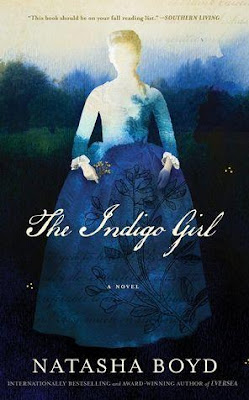
The Indigo Girl by Natasha Boyd (✰✰✰✰✰)

At only sixteen, Eliza Lucas is put in charge of her family’s faltering American plantations in South Carolina while her father travels to the Caribbean to attempt to salvage the family’s fortunes on their holdings there. Set in 1739, Eliza battles not only paternalism and misogyny but also the British and the Spanish. Uninterested in marriage, Eliza, despite the tremendous pressure it puts on her young shoulders, gamely picks up the baton and rallies her family, friends, and slaves in an attempt to preserve not only their livelihood but the fabric that holds all of their lives together. 

The novel explores themes of feminism, friendship, racism, master/slave relations, education, and plantation culture. Eliza was an early precursor of the Southern women who would hold together the plantation, slave-based economy of the South while the men went off to fight in the Civil War, only to be expected to step aside once the men returned. 


Based on a real woman, Eliza Lucas is the center that holds the novel together. She is mentally agile and unafraid to step up when her family needs her. Thinking outside the box, she chooses the as yet untried indigo plant and the dye it produces as the vehicle with which to save her family. Drawing strength from some characters and thwarted by others, Eliza’s hands-on zest for her endeavor lends tension to what otherwise might be a slow-paced read.


I absolutely loved this novel. It was rooted in characters without being slowed down by their development. It also avoided a lot of the stereotypical characters that are so common in Southern plantation literature. The science of indigo was lightly woven into the tale, giving a perfect balance of information and plot development. The one weakness was that historical happenings off the plantation with the British and Spanish were a bit too underrepresented. 


I listened to the audio version, marvelously narrated by Saskia Maarleveld. Her interpretation took an already lovely novel and brought it to a whole new level.

Wednesday, January 1, 2020

The Decade's Top Twenty: 2011-2019: A Recap

During the past nine years I have maintained this blog, and my reading lists on it, with varying degrees of accuracy. Some years every nonfiction and quality fiction book I read was faithfully recorded, others, not so much. Even with the lazy years and being one year shy of a decade, it is humbling to look back and realize that I recorded 620 books as read over the last nine years; I remembered to record an average of 68.9 books a year. In America, the mean average (the number inflated by the most avid readers) is 12 per year, but the median (meaning the number read by the typical reader) is only 4 per year. My goal as we enter the third decade of the 21st Century is to faithfully record every nonfiction and quality fiction book I read (I love romance novels but do not track those) and see what my number is at the end of 2029.

I thought it would be fun to do a Top Twenty list of the the number one fiction and nonfiction picks for each of the nine years the blog has been active plus a couple of wild cards. That means these twenty books have beat out six hundred(!) others to make the list. At the end, just as I do on my annual lists, I'll list each year's top audiobooks, which usually amounts to one or two from each year. Some titles include some kind of a synopsis, others don't. Some titles are linked to their review; hover your cursor to check, as they ended up looking different colors and states of underline here.

The Recap:

Top Ten Fiction:
2011: The Book Thief by Markus Zusak (World War II Germany: an ordinary German neighborhood...narrated by “Death”...profound)
2012: Count of Monte Cristo by Alexandre Dumas
2012: The Poisonwoood Bible by Barbara Kingsolver
2013: The Painted Veil by W. Somerset Maugham
2014: The Invention of Wings by Sue Monk Kidd (Hetty and Sarah will live inside my head for a very long time.)
2015: Bohemian Gospel by Dana Chamblee Carpenter (Strongest novel I have read in forever; originality; deep characters; great setting; tight plotting)
2016: The Lilac Girls by Martha Hall Kelly (I received a galley of this novel and began talking about it weeks before it was available to the public; my enthusiasm never waned all through the year. Considering that books I read at the beginning of the year sometimes get short shifted when it comes to the weeding process for the "Top Ten" list, it speaks volumes about how memorable this one truly is.)
2017: The Heart’s Invisible Furies by John Boyne (John Boyne is best known for his stark, shocking novel, The Boy in the Striped Pajamas. He has managed to take all the emotion that he poured into that YA novel and double it in his newest adult release, The Heart’s Invisible Furies. This novel explores those universal questions: who am I?, where do I come from?, and where am I going? Layer in an intricately wrought exploration of love, and you have a novel being justifiably hailed as “transcendent.” As I think back on reading this tale, it isn’t plot twists or even the characterizations that come into my mind. It is the way the book deposited a lump in my throat and a tightness in my chest every time I cracked open its cover.)
2018: The Great Alone by Kristin Hannah (If you follow my reading life, you might recall that I really hated Hannah’s much lauded The Nightingale. Taking that into consideration and the fact that the last book I read that was set here in Alaska, Dave Eggers’s Heroes of the Frontier, was just flat out awful in every regard, I had darkest depths of a crevasse expectations for The Great Alone. Since I wrote a review for this novel, I’ll direct you there for more of my thoughts.)
2019: The Lost Queen by Signe Pike (This is one of those genre bending novels that will appeal to a variety of readers. Between its covers you will find an historical fiction telling of the life of a real queen, Languoreth, in sixth century Scotland. Set in the era of the confluence of ancient pagan beliefs and Christianity, the novel is imbrued in a spirit of mysticism and taut with the kind of conflict that only an all out brawl to preserve ones' way of life can render. This novel will obviously find favor with readers of historical fiction and those who have a fascination with ancient Scotland, but those who love fantasy, myths and legends, strong woman protagonists, and atmospheric writing will also find much to love here.)

Top Ten Nonfiction:
2011: Unbroken by Laura Hillenbrand (World War II Pacific theater/biography: fantastic writing; story so amazing in parts it is difficult to believe it is not fiction)
2011: The Fear by Peter Godwin (Contemporary Zimbabwe: possibly the most powerful book I have ever read)
2012: Ghost Soldiers by Hampton Sides (nonfiction)
2013: The Boys in the Boat by Daniel James Brown
2014: Four Queens: The Provencal Sisters Who Ruled Europe by Nancy Goldstone (A wonderful story of four sisters who’s lives paint a vivid picture of life in thirteenth-century Europe.)
2015: In the Kingdom of Ice by Hampton Sides (Not as good as Ghost Soldiers, but still has characters you tuck away in your heart and a fascinating tale.)
2016: The Way to the Spring by Ben Ehrenreich (Without a doubt, this book gets my vote for the work that hasn't received near the attention it deserves. It is difficult, as an American writer, to write a book about the side of a conflict--in this case the Palestinians living in the Occupied Territories--that most Americans do not support. Given recent decisions made by the Israeli court system regarding illegal actions by Israeli settlers in the Occupied Territories, I would love to see more American readers give Ben's book another look.)
2017: The Fact of a Body: A Murder and a Memoir by Alexandria Marzano Lesnevich (I knew from the moment I finished this true crime story that it would be my number one nonfiction of the year. It is just that striking; I’ve never read another book like it. The author tells the story of her own abuse woven into the fabric of the story of a death penalty criminal for whom she has been tasked to prepare a legal defense. It is a story of wrestling with demons, finding moral footing, and exploring whether truth can ever be an absolute. If you struggle with dealing with an abusive past, this might be too intense for you; for all others, this is a must read. This would be a fabulous, fabulous book club selection!)
2018: In Extremis: The Life and Death of the War Correspondent Marie Colvin by Lindsey Hilsum (One of the biggest issue that I tend to have with biographers is that they fall in love with their subjects. It would have been easy for Hilsum, who was both a friend and a colleague of Marie Colvin, to do so. Marie Colvin is, without a doubt, the most renowned female war correspondent of all time and was loved by those who spent time with her in the world’s darkest places for her willingness to help, positive attitude, courage, and passion for the mission she felt called to—that of shining a light on the most egregious happenings so that the world could not claim ignorance. For all her wonderful attributes, Marie Colvin fought some sizable personal demons every day. Lindsey Hilsum shows her readers that part of what made this woman so awe-inspiring was that everything didn’t come easily for her, that as dark as her professional world was, her personal world often shone rather less than bright, too. This is an outstanding, if at times grim, biography that I recommend to anyone curious about imbedded war correspondents. recommended for book clubs)
2019: The Thousand-Mile War by Brian Garfield (This is a work of military nonfiction, which isn't usually my favorite genre by a long shot. However, Garfield, who wrote fiction thrillers, was clearly passionate about his subject and brought all his storytelling skills to the table. The book, a history of Alaska's Aleutian Islands and the role they played in World War II, was chosen by me as part of a high school Alaska History curriculum I wrote and taught last school year. All of my students and I approached the book with a bit of hesitation due to its length, boring cover (shallow, I know), and potential to be very dry. We were all pleasantly surprised and soon found ourselves immersed. Garfield showed his suspense writer chops, keeping up a brisk pace and setting a vivid scene, but what he did best is something not all thriller writers do well: he made us really, really fall in love with the men at the heart of his tale and care about what happened to them. Despite its length and 1960s publication date (mid-20th century history books tend to lack the narrative flair of those written in the 21st), this work is highly readable and engaging.)

Top Audiobooks:
2011: Parrot and Olivier in America by Peter Carey
(narrated by Humphrey Bower, who does such an excellent job with Parrot’s and Olivier’s voices that I thought there were two separate narrators)2011: The Book Thief by Markus Zusak
(narrated by Allan Corduner, who is absolutely pitch perfect as the narrator, “Death”)
2012: Their Eyes Were Watching God by Zora Neale Hurston, narrated by the incomparable Ruby Dee.
2013: North and South by Elizabeth Gaskell, narrated by Juliet Stevenson
2014: The Invention of Wings by Sue Monk Kidd (Powerfully told through the excellent narration of Adepero Oduye and Jenna Lamia.)
2015: No audios listed for the year
2016: A Brief History of Seven Killings by Marlon James (This complex tale of life in Bob Marley's Jamaica earned its author a well-deserved Booker Prize. Although the novel only earned three stars from me, its prose, scope, and characters definitely deserved much higher honors. The reason I rated it so low was because the subject matter and language (both profane and dialectal) made it such a difficult read that I cannot say that I truly enjoyed it. The audio--which featured an ensemble cast of narrators: Robertson Dean, Cherise Boothe, Dwight Bacquie, Ryan Anderson, Jonathan McClain, Robert Younis, and Thom Rivera--was very helpful to anyone who struggles to read the dense dialect of an unfamiliar culture. One huge downside to listening to this one is that it shifts lighting fast through a large cast of characters and back and forth along a very lengthy timeline. The voices used for some of the characters were so close that if I missed the announcement of who was speaking, or came back to listening after pausing it for a time, I was quite lost. Overall, though, I think the audio is the way to go with this one if you struggle, as I did, trying to read the dialect in print.)
2017: Homegoing by Yaa Gyasi (This was another book that was strongly in the running for my number one fiction slot this year. I’m glad the audio is so fabulous, allowing me to give this story of two sisters, one sold into slavery, the other married to a slaver, its due. This novel, which reads like a series of interconnected stories, traces the descendants of both sisters for three hundred years. The audio can get a little challenging to follow who is narrating, but the quality of the narration makes up for those issues. Whether you do it in print or audio, this is a must read! If you would like to read my full review, you can do so here.)
2018: Beartown and its conclusion, Us Against You, by Fredrik Backman (Narrator Marin Ireland not only masters voices for each of the characters, she successfully conveys all the subtle emotional nuances needed to accurately impart the message behind the happenings in Beartown. There was some criticism that Marin Ireland didn’t attempt Swedish accents or that the publisher didn’t select a Swedish narrator for the audiobook, but I disagree. Her performance is so pitch perfect in every other regard. I also feel that a Swedish narrator would have taken the global aspect away from the story, which is written in such a way that it is not obviously set in Sweden. Because an American narrated the story, I could absolutely picture this tale playing out in any hockey crazy small American town. Fantastic story. Fantastic narration. What more could you ask for?)
2019: The Last Report on the Miracles at Little No Horse by Louise Erdrich (This is narrated by Anna Fields, a narrator that was completely new to me. Everything from her individual voices to a tone that leant the novel just the right amount of gravity made this the perfect road trip listen as we drove through the area in the US where the book is set.)
2019: Americanah by Chimamanda Ngozi Adichie (This is narrated so ably by Adjoa Andoh that at times I would have sworn there was more than one narrator. Not only did she master and consistently deploy all the many accents of this vast cast, she gave each of those voices character attributes that made them breathe: the jaded, exhausted med student single mother, the impatient elderly relative, the opportunistic house-husband.)

2019: The Top Ten

This year's Top Ten is extra fun because these are the books that will define the end of a decade for me. Numbers-wise, this has been the worst year in recent memory, with only sixty-five books read. I can't remember the last time I read less than seventy, and only a shocking few--twenty-two--were print. In general, the books were far shorter than normal as well. If you would like to see my complete list of 2019 reads and my stats, you will find them HERE. A list of all my five star books is HERE. On the plus side, for the first time in a very long time, I completed a fairly sizable challenge, the Reading Women Challenge. My results are HERE. Despite having a smaller pool of contenders, this year's Top Ten could easily have held their own in any reading year.

Top Five Fiction:
It was a difficult decision settling on the best of my five fiction selections. The first three books on this list were all strong novels, and I loved them all for different reasons. In the end, my number one fiction of 2019 is Signe Pike's The Lost Queen.


The Lost Queen is one of those genre bending novels that will appeal to a variety of readers. Between its covers you will find an historical fiction telling of the life of a real queen, Languoreth, in sixth century Scotland. Set in the era of the confluence of ancient pagan beliefs and Christianity, the novel is imbrued in a spirit of mysticism and taut with the kind of conflict that only an all out brawl to preserve ones' way of life can render. This novel will obviously find favor with readers of historical fiction and those who have a fascination with ancient Scotland, but those who love fantasy, myths and legends, strong woman protagonists, and atmospheric writing will also find much to love here.


The Last Report on the Miracles at Little No Horse by Louise Erdrich was also a huge hit for me this year. Storytelling at its finest is on display in this story of a priest, Father Damien, who has spent his life serving the Ojibwe. An intricate web is woven out of the priest's own secrets and those of a nun, Sister Leopolda. The twining together of their lives and Father Damien's end-of-life wrestling with truth at all costs is told against the backdrop of the dissipation of traditions and the dying of a way of life. This novel is all about character and moral dilemma.


Roses by Leila Meacham was a huge surprise for me and another that spoke loudly in my mind as I tried to select the number one novel of 2019. I had never heard of this novel or its author and selected it on a whim while perusing ideas for a multi-generational novel for the Reading Women Challenge. I was in Texas at the time and wanted something that was set there. This novel follows three founding families of a small east Texas town, spanning the twentieth century and three generations. All about legacy, this narrative is centered around choices made at pivotal moments and the trickle down affect they can have on the ones we love the most.


Americanah by Chimamanda Ngozi Adichie, while not at the top of my list, was a novel that I pondered a lot while I listened to it and after. Its immigrant subject matter is definitely timely, but I think it will hold its own in any decade, as there will always be movement of peoples around the globe. I loved how unapologetic this novel is and feel that that is what sets it apart from other novels I've read in this genre. Even though I have never been an immigrant in the US, I was raised overseas and laughed aloud at how Adichie's characters perceived their adopted country and its natives. The point that she makes--that everything American isn't the only way or even the best way--is very valid and makes for reading that is in turns humorous and poignant.


The God of Small Things by Arundhati Roy seems to be one of those books that is either a hit or a miss with people, and I can see why. The first half of this story--about an Indian family and how caste and racism can result in a chain of events that begins slowly and gains momentum until the climactic moment that ruptures their lives--was slow moving and full of nebulous plot lines. That, combined with prose that was a bit too formulaically sprinkled with figurative language for me at times, left me doubting the book would get more than three stars out of me. However, once those plot lines began to weave themselves together, Arundhati Roy's ingenious grasp of story crafting swept all other considerations away and sealed this novel's spot in my Top Ten.


Top Five Nonfiction:
Choosing my number one nonfiction is always tricky because there is such a vast variety of material. This year was different in that one book really grabbed me. The biggest surprise came by way of the book's genre. Brian Garfield's The Thousand-Mile War had me from start to finish.

The Thousand-Mile War by Brian Garfield is a work of military nonfiction, which isn't usually my favorite genre by a long shot. However, Garfield, who wrote fiction thrillers, was clearly passionate about his subject and brought all his storytelling skills to the table. The book, a history of Alaska's Aleutian Islands and the role they played in World War II, was chosen by me as part of a high school Alaska History curriculum I wrote and taught last school year. All of my students and I approached the book with a bit of hesitation due to its length, boring cover (shallow, I know), and potential to be very dry. We were all pleasantly surprised and soon found ourselves immersed. Garfield showed his suspense writer chops, keeping up a brisk pace and setting a vivid scene, but what he did best is something not all thriller writers do well: he made us really, really fall in love with the men at the heart of his tale and care about what happened to them. Despite its length and 1960s publication date (mid-20th century history books tend to lack the narrative flair of those written in the 21st), this work is highly readable and engaging.


Blood and Thunder by Hampton Sides would have been the book that all my reading friends, having seen my list of 2019 five star reads, would have predicted would be my top nonfiction pick of the year. Don't get me wrong. I loved this book about the conquest of the American West, focusing on Kit Carson's three pivotal decades from the heyday of the mountain man to the dying of both his way of life and that of the Navajo and other Native American tribes. That said, I feel like Sides chose a topic that was a bit too vast with this one. In his other books such as Ghost Soldiers and In the Kingdom of Ice, Sides was able to tell a tighter story that focused on the men at the heart of his tales. While you do get a good feel for Carson, I think I was a bit disappointed that it wasn't on the same visceral level that you get to know the men in Garfield's Alaska, the level that Sides normally delivers on. As a history, Sides definitely still delivers in his fantastically narrative five-star way, but because history is, for me, about the people who made it, Garfield gets top billing.


Spineless by Juli Berwald was bound to be a winner for me as I am endlessly fascinated by the creatures at its heart: jellyfish. This is one of those books that the entire time I was reading it I was constantly saying, "Did you know...?" to anyone who was nearby. In addition, I related in an intimate way with the author of this natural history memoir. Juli Berwood, like me, put her own academic pursuits on hold to raise her family and then gradually drifted back to them as her children grew more self-sufficient and made fewer demands on her time. The biggest complaint reviewers have about this memoir is that there is either too much personal narrative or too much natural history, dependent upon what the reader wanted or expected. I found it the perfect balance of both.


Men We Reaped by Jesmyn Ward was one of the first books I read for the year and one that stayed with me. While I could not identify at all with the subject matter--the author's loss, over the span of five years, of five young men who were important in her life, losses that stemmed from growing up black in the poverty and racism of rural Mississippi--I felt that reading this book helped me to better understand and sympathize with their reality. We cannot walk in each other's shoes, but books by someone from the inside which so clearly, for the understanding of outsiders, unpack the experiences of their people can go a long way towards building a bridge across racism and class divides. This is a beautiful eulogy that gives a greater meaning to the all too brief lives of those young men.


Heartland by Sarah Smarsh is another such book. When I first read about the book, I thought that is sounded like one big long excuse. I couldn't have been more wrong. Just like Jesmyn Ward, Sarah Smarsh is able to look at herself, her community, and her country and see, without excuses or judgement, both the micro and macro picture of poverty in working class middle America. While Ward's book is about black poverty, Smarsh's tells the story of white poverty. As with Ward's book, this is cultural commentary at its finest and from someone on the inside. Reading these two books together was extra eyeopening. 


Top Audiobooks:
This year two audiobooks, both from books that made my Top Ten, both so different from each other, really stood out equally among this year's listens:

The Last Report on the Miracles at Little No Horse is narrated by Anna Fields, a narrator that was completely new to me. Everything from her individual voices to a tone that leant the novel just the right amount of gravity made this the perfect road trip listen as we drove through the area in the US where the book is set.

Americanah is narrated so ably by Adjoa Andoh that at times I would have sworn there was more than one narrator. Not only did she master and consistently deploy all the many accents of this vast cast, she gave each of those voices character attributes that made them breathe: the jaded, exhausted med student single mother, the impatient elderly relative, the opportunistic house-husband.