Showing posts sorted by date for query the great alone. Sort by relevance Show all posts

Wednesday, January 1, 2020

The Decade's Top Twenty: 2011-2019: A Recap

During the past nine years I have maintained this blog, and my reading lists on it, with varying degrees of accuracy. Some years every nonfiction and quality fiction book I read was faithfully recorded, others, not so much. Even with the lazy years and being one year shy of a decade, it is humbling to look back and realize that I recorded 620 books as read over the last nine years; I remembered to record an average of 68.9 books a year. In America, the mean average (the number inflated by the most avid readers) is 12 per year, but the median (meaning the number read by the typical reader) is only 4 per year. My goal as we enter the third decade of the 21st Century is to faithfully record every nonfiction and quality fiction book I read (I love romance novels but do not track those) and see what my number is at the end of 2029.

I thought it would be fun to do a Top Twenty list of the the number one fiction and nonfiction picks for each of the nine years the blog has been active plus a couple of wild cards. That means these twenty books have beat out six hundred(!) others to make the list. At the end, just as I do on my annual lists, I'll list each year's top audiobooks, which usually amounts to one or two from each year. Some titles include some kind of a synopsis, others don't. Some titles are linked to their review; hover your cursor to check, as they ended up looking different colors and states of underline here.

The Recap:

Top Ten Fiction:
2011: The Book Thief by Markus Zusak (World War II Germany: an ordinary German neighborhood...narrated by “Death”...profound)
2012: Count of Monte Cristo by Alexandre Dumas
2012: The Poisonwoood Bible by Barbara Kingsolver
2013: The Painted Veil by W. Somerset Maugham
2014: The Invention of Wings by Sue Monk Kidd (Hetty and Sarah will live inside my head for a very long time.)
2015: Bohemian Gospel by Dana Chamblee Carpenter (Strongest novel I have read in forever; originality; deep characters; great setting; tight plotting)
2016: The Lilac Girls by Martha Hall Kelly (I received a galley of this novel and began talking about it weeks before it was available to the public; my enthusiasm never waned all through the year. Considering that books I read at the beginning of the year sometimes get short shifted when it comes to the weeding process for the "Top Ten" list, it speaks volumes about how memorable this one truly is.)
2017: The Heart’s Invisible Furies by John Boyne (John Boyne is best known for his stark, shocking novel, The Boy in the Striped Pajamas. He has managed to take all the emotion that he poured into that YA novel and double it in his newest adult release, The Heart’s Invisible Furies. This novel explores those universal questions: who am I?, where do I come from?, and where am I going? Layer in an intricately wrought exploration of love, and you have a novel being justifiably hailed as “transcendent.” As I think back on reading this tale, it isn’t plot twists or even the characterizations that come into my mind. It is the way the book deposited a lump in my throat and a tightness in my chest every time I cracked open its cover.)
2018: The Great Alone by Kristin Hannah (If you follow my reading life, you might recall that I really hated Hannah’s much lauded The Nightingale. Taking that into consideration and the fact that the last book I read that was set here in Alaska, Dave Eggers’s Heroes of the Frontier, was just flat out awful in every regard, I had darkest depths of a crevasse expectations for The Great Alone. Since I wrote a review for this novel, I’ll direct you there for more of my thoughts.)
2019: The Lost Queen by Signe Pike (This is one of those genre bending novels that will appeal to a variety of readers. Between its covers you will find an historical fiction telling of the life of a real queen, Languoreth, in sixth century Scotland. Set in the era of the confluence of ancient pagan beliefs and Christianity, the novel is imbrued in a spirit of mysticism and taut with the kind of conflict that only an all out brawl to preserve ones' way of life can render. This novel will obviously find favor with readers of historical fiction and those who have a fascination with ancient Scotland, but those who love fantasy, myths and legends, strong woman protagonists, and atmospheric writing will also find much to love here.)

Top Ten Nonfiction:
2011: Unbroken by Laura Hillenbrand (World War II Pacific theater/biography: fantastic writing; story so amazing in parts it is difficult to believe it is not fiction)
2011: The Fear by Peter Godwin (Contemporary Zimbabwe: possibly the most powerful book I have ever read)
2012: Ghost Soldiers by Hampton Sides (nonfiction)
2013: The Boys in the Boat by Daniel James Brown
2014: Four Queens: The Provencal Sisters Who Ruled Europe by Nancy Goldstone (A wonderful story of four sisters who’s lives paint a vivid picture of life in thirteenth-century Europe.)
2015: In the Kingdom of Ice by Hampton Sides (Not as good as Ghost Soldiers, but still has characters you tuck away in your heart and a fascinating tale.)
2016: The Way to the Spring by Ben Ehrenreich (Without a doubt, this book gets my vote for the work that hasn't received near the attention it deserves. It is difficult, as an American writer, to write a book about the side of a conflict--in this case the Palestinians living in the Occupied Territories--that most Americans do not support. Given recent decisions made by the Israeli court system regarding illegal actions by Israeli settlers in the Occupied Territories, I would love to see more American readers give Ben's book another look.)
2017: The Fact of a Body: A Murder and a Memoir by Alexandria Marzano Lesnevich (I knew from the moment I finished this true crime story that it would be my number one nonfiction of the year. It is just that striking; I’ve never read another book like it. The author tells the story of her own abuse woven into the fabric of the story of a death penalty criminal for whom she has been tasked to prepare a legal defense. It is a story of wrestling with demons, finding moral footing, and exploring whether truth can ever be an absolute. If you struggle with dealing with an abusive past, this might be too intense for you; for all others, this is a must read. This would be a fabulous, fabulous book club selection!)
2018: In Extremis: The Life and Death of the War Correspondent Marie Colvin by Lindsey Hilsum (One of the biggest issue that I tend to have with biographers is that they fall in love with their subjects. It would have been easy for Hilsum, who was both a friend and a colleague of Marie Colvin, to do so. Marie Colvin is, without a doubt, the most renowned female war correspondent of all time and was loved by those who spent time with her in the world’s darkest places for her willingness to help, positive attitude, courage, and passion for the mission she felt called to—that of shining a light on the most egregious happenings so that the world could not claim ignorance. For all her wonderful attributes, Marie Colvin fought some sizable personal demons every day. Lindsey Hilsum shows her readers that part of what made this woman so awe-inspiring was that everything didn’t come easily for her, that as dark as her professional world was, her personal world often shone rather less than bright, too. This is an outstanding, if at times grim, biography that I recommend to anyone curious about imbedded war correspondents. recommended for book clubs)
2019: The Thousand-Mile War by Brian Garfield (This is a work of military nonfiction, which isn't usually my favorite genre by a long shot. However, Garfield, who wrote fiction thrillers, was clearly passionate about his subject and brought all his storytelling skills to the table. The book, a history of Alaska's Aleutian Islands and the role they played in World War II, was chosen by me as part of a high school Alaska History curriculum I wrote and taught last school year. All of my students and I approached the book with a bit of hesitation due to its length, boring cover (shallow, I know), and potential to be very dry. We were all pleasantly surprised and soon found ourselves immersed. Garfield showed his suspense writer chops, keeping up a brisk pace and setting a vivid scene, but what he did best is something not all thriller writers do well: he made us really, really fall in love with the men at the heart of his tale and care about what happened to them. Despite its length and 1960s publication date (mid-20th century history books tend to lack the narrative flair of those written in the 21st), this work is highly readable and engaging.)

Top Audiobooks:
2011: Parrot and Olivier in America by Peter Carey
(narrated by Humphrey Bower, who does such an excellent job with Parrot’s and Olivier’s voices that I thought there were two separate narrators)2011: The Book Thief by Markus Zusak
(narrated by Allan Corduner, who is absolutely pitch perfect as the narrator, “Death”)
2012: Their Eyes Were Watching God by Zora Neale Hurston, narrated by the incomparable Ruby Dee.
2013: North and South by Elizabeth Gaskell, narrated by Juliet Stevenson
2014: The Invention of Wings by Sue Monk Kidd (Powerfully told through the excellent narration of Adepero Oduye and Jenna Lamia.)
2015: No audios listed for the year
2016: A Brief History of Seven Killings by Marlon James (This complex tale of life in Bob Marley's Jamaica earned its author a well-deserved Booker Prize. Although the novel only earned three stars from me, its prose, scope, and characters definitely deserved much higher honors. The reason I rated it so low was because the subject matter and language (both profane and dialectal) made it such a difficult read that I cannot say that I truly enjoyed it. The audio--which featured an ensemble cast of narrators: Robertson Dean, Cherise Boothe, Dwight Bacquie, Ryan Anderson, Jonathan McClain, Robert Younis, and Thom Rivera--was very helpful to anyone who struggles to read the dense dialect of an unfamiliar culture. One huge downside to listening to this one is that it shifts lighting fast through a large cast of characters and back and forth along a very lengthy timeline. The voices used for some of the characters were so close that if I missed the announcement of who was speaking, or came back to listening after pausing it for a time, I was quite lost. Overall, though, I think the audio is the way to go with this one if you struggle, as I did, trying to read the dialect in print.)
2017: Homegoing by Yaa Gyasi (This was another book that was strongly in the running for my number one fiction slot this year. I’m glad the audio is so fabulous, allowing me to give this story of two sisters, one sold into slavery, the other married to a slaver, its due. This novel, which reads like a series of interconnected stories, traces the descendants of both sisters for three hundred years. The audio can get a little challenging to follow who is narrating, but the quality of the narration makes up for those issues. Whether you do it in print or audio, this is a must read! If you would like to read my full review, you can do so here.)
2018: Beartown and its conclusion, Us Against You, by Fredrik Backman (Narrator Marin Ireland not only masters voices for each of the characters, she successfully conveys all the subtle emotional nuances needed to accurately impart the message behind the happenings in Beartown. There was some criticism that Marin Ireland didn’t attempt Swedish accents or that the publisher didn’t select a Swedish narrator for the audiobook, but I disagree. Her performance is so pitch perfect in every other regard. I also feel that a Swedish narrator would have taken the global aspect away from the story, which is written in such a way that it is not obviously set in Sweden. Because an American narrated the story, I could absolutely picture this tale playing out in any hockey crazy small American town. Fantastic story. Fantastic narration. What more could you ask for?)
2019: The Last Report on the Miracles at Little No Horse by Louise Erdrich (This is narrated by Anna Fields, a narrator that was completely new to me. Everything from her individual voices to a tone that leant the novel just the right amount of gravity made this the perfect road trip listen as we drove through the area in the US where the book is set.)
2019: Americanah by Chimamanda Ngozi Adichie (This is narrated so ably by Adjoa Andoh that at times I would have sworn there was more than one narrator. Not only did she master and consistently deploy all the many accents of this vast cast, she gave each of those voices character attributes that made them breathe: the jaded, exhausted med student single mother, the impatient elderly relative, the opportunistic house-husband.)

Monday, January 14, 2019

2018: The Top Ten


In 2018, I didn’t have as many five-star reads as I did in 2017—only nine, five fiction and six nonfiction, as opposed to a total of sixteen, ten fiction and six nonfiction. In 2016, sixteen books also garnered top honors. Historically, I tend to be a bit tougher on my nonfiction reads, and this year, for the first time ever, I read more nonfiction than fiction. Usually, though, including this year, they are fairly close, so I don’t know if that can really explain my somewhat lackluster year. To be fair to the books that did earn five stars this year, the ones that did shine did so brightly.
This year’s top ten rose to the top of a pile of 77 total reads—the lower end of average for me. Here are the basic stats:

Total number of books: 77
Total fiction: 34
Total nonfiction: 43
Number of print books: 35
Number of pages read: 11,688
Number of audio books: 42
Number of hours listened to: 523

2018 Top Fiction:

This year’s top novel was a difficult choice, but there was one book that I talked about more than any other. It could be that it is set where I live, or it could be that I went into it with very low expectations. No matter the reason, here it is:

The Great Alone by Kristin Hannah snags Lit in the Last Frontier’s top fiction read of the year. If you follow my reading life, you might recall that I really hated Hannah’s much lauded The Nightingale. Taking that into consideration and the fact that the last book I read that was set here in Alaska, Dave Eggers’s Heroes of the Frontier, was just flat out awful in every regard, I had darkest depths of a crevasse expectations for The Great Alone. Since I wrote a review for this novel, I’ll direct you there for more of my thoughts.

2018 Fiction Runners-up:

Rounding out the other four fiction slots, in no particular order, are:

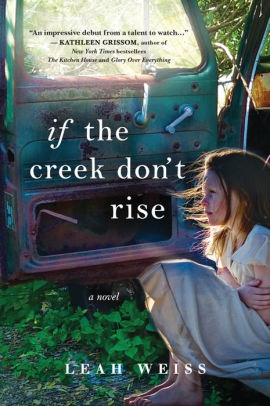
If the Creek Don't RiseIf the Creek Don’t Rise by Leah Weiss: This book is a fabulous example of Southern Fiction and was recommended to me by two of my favorite readers, a Tennessee lady and a North-easterner. I found it interesting that two friends of mine who don’t share a common reading circle and who generally enjoy different books from each other would both rave about this evocative and wrenching debut. Within its own genre, If the Creek Don’t Rise was also chosen by the Southern Independent Booksellers Association as a top pick. As is common in Southern Fiction, this book is drenched in that slow burning melancholy of lives that happen to a person—as opposed to lives mastered—and the systemic inability to alter your trajectory once on it. I wanted so much for our protagonist that I just had a terrible feeling wouldn’t be within her grasp. I read this outstanding novel at the very beginning of the year and even then had no doubt that it would make this list; I cannot recommend it highly enough. recommended for book clubs

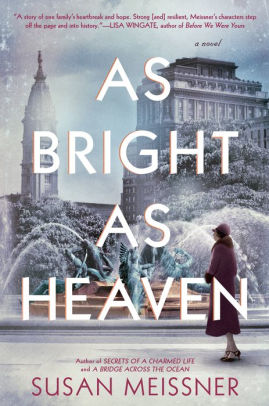
As Bright as HeavenAs Bright As Heaven by Susan Meissner: Meissner is one of the many, many authors whom I have never read and always mean to “get to.” I read the synopsis of this novel in the publisher’s pre-publication marketing and was drawn to its unique plot line. Set in 1918 Philadelphia, this lovely, character driven novel centers on a mother and her three daughters, newly arrived in the city when the Spanish Flu arrives and alters all of their lives beyond imagining. I loved every minute of following these women as they built not the life they had anticipated but one even richer in love, accomplishments, and service. recommended for book clubs

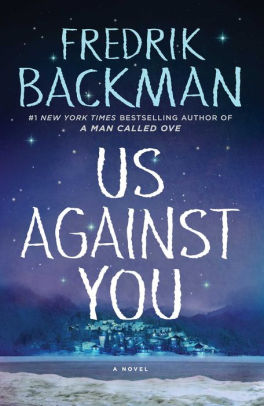
Us Against You
Us Against You by Fredrik Backman: This novel is the conclusion to Swedish novelist Backman’s Beartown; you absolutely must read that novel first. Both novels are set in a small, rural Swedish town and show what can happen when priorities become skewed. I enjoyed both novels, but the finale earned the fifth star because the plot didn’t always go in the direction I thought it would (or wanted it to), the characters that were interesting in the first book became riveting in this one, and the conclusion of the message was profound without being trite.

In Every Moment We Are Still AliveIn Every Moment We Are Still Alive by Tom Malmquist: Another great work from a Swedish writer, this one is very different stylistically—Malmquist’s writing is far more spare and artistic (he is a poet), and this is an autobiographical novel (the main character is tellingly named Tom). His style, tone, and personal engagement are perfect for this stirring story of a man trying to go on in the wake of his wife’s death, a death which has left Tom alone raising their baby daughter. This is not an easy read from start to finish, but it is short (again, not surprising from a poet) and will leave you thinking about it for a very long time.

2018 Top Nonfiction:

As the year began to draw to a close, I had five five star nonfiction reads and no idea how I would decide between several of them for the top slot. In December I read Lindsey Hilsum’s standout biography of Marie Colvin, and I knew without a doubt that I had found a winner. So, Lit in the Last Frontier’s top spot for nonfiction goes to:

In Extremis: The Life and Death of the War Correspondent Marie ColvinIn Extremis: The Life and Death of the War Correspondent Marie Colvin by Lindsey Hilsum: One of the biggest issue that I tend to have with biographers is that they fall in love with their subjects. It would have been easy for Hilsum, who was both a friend and a colleague of Marie Colvin, to do so. Marie Colvin is, without a doubt, the most renowned female war correspondent of all time and was loved by those who spent time with her in the world’s darkest places for her willingness to help, positive attitude, courage, and passion for the mission she felt called to—that of shining a light on the most egregious happenings so that the world could not claim ignorance. For all her wonderful attributes, Marie Colvin fought some sizable personal demons every day. Lindsey Hilsum shows her readers that part of what made this woman so awe-inspiring was that everything didn’t come easily for her, that as dark as her professional world was, her personal world often shone rather less than bright, too. This is an outstanding, if at times grim, biography that I recommend to anyone curious about imbedded war correspondents. recommended for book clubs

2018 Nonfiction Runners-up:

The other four nonfiction books that earned top honors, in no particular order, are:

Shoe Dog: A Memoir by the Creator of NikeShoe Dog by Phil Knight: This might look to be an improbable book to make the top ten of someone who reads as much serious nonfiction as I do, but there is a lot to like here. Phil Knight is the founder of Nike, and this is the story of how a college project—that absolutely no one thought was plausible—morphed into a fantastic success story. A former collegiate runner, Knight shares what drove him as an athlete and how he used the mental attributes and knowledge of equipment honed as a competitive runner and the networking connections made during those years as the driving factors in beginning and then growing Nike. This story is inspiring and fast paced. Even if you have no interest in beginning a business, it is a great read about an iconic product and the man behind it.

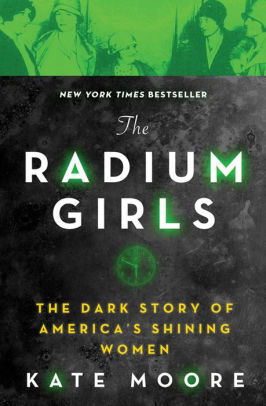
The Radium Girls: The Dark Story of America's Shining WomenRadium Girls by Kate Moore: Until I read In Extremis in December, it was looking like this work would be my top nonfiction of the year. Another book that covers many micro topics in the course of telling its central tale, this story of small town America and unscrupulous company practices made many, many “best of” lists this year. During the first decade of the 1900s, paint containing radium began being used to paint numbers on clock faces and aviation equipment because the paint glowed in the dark. This book tells the story of the young women—whose small, deft hands were particularly suited to the minutia of the work—who painted the faces of the watches, clocks, and instruments. By the 1920s, it was becoming apparent that these women were all suffering terribly—and dying—as a result of their work. The book tells of their desperate fight during their dying years to get justice from the companies they worked for and bring awareness to their plight.

The Emperor of All Maladies: A Biography of CancerThe Emperor of All Maladies by Siddhartha Mukhergee: I am very late to the reading party with regard to this book depicting the history of cancer. If you have read a broadly about the history of disease, then a good portion of this book will be a refresher course on the topic but from the standpoint of how that history relates to cancer. It was yet another work that was a strong candidate for my top nonfiction spot. The reason I didn’t select it was because I don’t think it is a book that will have the universal appeal of In Extremis. There are times when the book gets a bit bogged down in medical jargon, and if you don’t come at the subject with a decent knowledge base and interest in the subject, you will likely end up skimming a bit. If however, it is a subject you enjoy, you will love this book.

Ticker: The Quest to Create an Artificial HeartTicker: The Quest to Create an Artificial Heart by Mimi Swartz: My dad and I had been talking about the research that led to the artificial heart. I was pretty positive that it had its genesis at the University of Utah (where I had heart surgery), but my dad was positive it began in Austin, Texas. Shortly after our discussion, I saw this book in its publisher’s new book marketing. Dad was correct, and this is the story. I loved this book! Mimi Swartz does a great job of making not only the history of the artificial heart interesting and understandable to the layperson but of bringing to vibrant life the many researchers. The book also tackles the path that any medical device takes to FDA approval, the ethical issues, and the emotional and familial stressors of the researchers. While this book is an easier read than The Emperor of All Maladies, I still felt it lacked the broad appeal that might have earned it my top spot. That said, the artificial heart is one of the most significant medical milestones of the twentieth century, and this readable history will find many devotees.

Nonfiction Near Miss: I only had one extra nonfiction title that didn’t make the top five: Nine Continents by Xiaolu Guo

2018 Top Audiobook:

BeartownBeartown and its conclusion, Us Against You, by Fredrik Backman were the absolute best audiobooks I listened to this year. Narrator Marin Ireland not only masters voices for each of the characters, she successfully conveys all the subtle emotional nuances needed to accurately impart the message behind the happenings in Beartown. There was some criticism that Marin Ireland didn’t attempt Swedish accents or that the publisher didn’t select a Swedish narrator for the audiobook, but I disagree. Her performance is so pitch perfect in every other regard. I also feel that a Swedish narrator would have taken the global aspect away from the story, which is written in such a way that it is not obviously set in Sweden. Because an American narrated the story, I could absolutely picture this tale playing out in any hockey crazy small American town. Fantastic story. Fantastic narration. What more could you ask for?

2018 Big Miss: Spies in the Congo: America’s Atomic Mission in World War II by Susan Williams. It baffled me that someone could manage to take a spy story, set in colonial Africa and based upon the secrecy of the hunt for uranium, and make it so incredibly boring. This book desperately needed an editor to weed out the minutia and bring into focus the heart of what should have been a fascinating tale.

Hopefully you will have a chance to add one of these outstanding books to your stack! I wish for you all a wonderfully bookish year!

Tuesday, November 27, 2018

The Great Alone by Kristin Hannah ⭐️⭐️⭐️⭐️⭐️


Nobody among my reading friends disliked Kristin Hannah’s The Nightingale more than I did. Couple my shudders at the memory of that book along with the way I felt about the last novel I read set in Alaska, Dave Eggers’s Heroes of the Frontier (lucky to pull two stars out of me), and it is a wonder that I even considered reading Kristin Hannah’s The Great Alone. All of the raving about how The Nightingale was the book that Hannah was born to write is completely misplaced. She has a family history that is linked in with the plot of The Great Alone, and that resonates throughout the novel. This was the book she was meant write.


I love my state and read a fair number of books set in Alaska, but most of them tend to be nonfiction. Oddly enough, the bulk of the fiction that comes from Alaskan writers tends to take place in places other than here. This leaves people from Outside as the ones who write the majority of the novels set on my home turf. Many of them have never even been here but see in our state either a catchy setting that will draw readers to their novels or someplace that gives their imagination room to roam. Often, that imagination goes well beyond the bounds of the possible and the real and into the realm of eye rolling, trying to play up stereotypes that any Alaskan would find ridiculous. I’m looking at you, Dave Eggers.

From the standpoint of sticking to the truth of things, Hannah is spot on with this novel. The setting of the book, a location a short boat ride from Homer, Alaska, is well sketched without playing up aspects that Outsiders would find enticing but locals would immediately spot as false. Her novel is set several decades ago, but even today many of her markers of plot and setting still hold true. Our family loves the Homer area, and my husband and I plan on retiring there, perhaps even in Seldovia, a small hamlet, much like the setting of The Great Alone, across Katchemak Bay from Homer. I love how this novel brought this place I love so much home in such an intimate way.

Another thing that Hannah does really well in this novel is letting her characters shape the plot and setting instead of letting those elements drive character development. One of my biggest complaints with The Nightingale was how stereotypical and wooden her characters were, as if the author had made a list of all the characters she felt a novel set in France during the Nazi occupation required. In this case the novel makes sense because the characters create a setting to suit themselves and in so doing an authentic plot is formed.

I absolutely recommend this novel for all readers who enjoy late twentieth century historical novels, realistic characters, and books set in the Last Frontier. 

Monday, January 1, 2018

2017: The Top Ten

2017 was a fantastic reading year for me, both in terms of the numbers (boosted due to some pretty crappy health issues) and in terms of the quality of what I read.  I read a total of 81 books: 43 fiction and 38 nonfiction.  Forty print books added up to 14,185 pages and 41 audios to a total of 532.5 hours.  I had ten five star novels and six five star nonfiction reads.

Some years, I announce a number one choice for fiction and one for nonfiction.  Others, I find it impossible to rank them, so I just list them all.  I try to always select five each for fiction and nonfiction, but some years, I just have to cheat.  Trying to pick five novels this year, let alone select a number one, has been nearly impossible.  However, last year I made a commitment to play by the rules, at least to the extent of picking five in each category.  This year I’m forcing myself to pick a number one selection in each category as well.

So…Lit in the Last Frontier’s number one novel of 2017 is:

The Heart’s Invisible Furies by John Boyne

John Boyne is best known for his stark, shocking novel, The Boy in the Striped Pajamas.  He has managed to take all the emotion that he poured into that YA novel and double it in his newest adult release, The Heart’s Invisible Furies.  This novel explores those universal questions: who am I?, where do I come from?, and where am I going?  Layer in an intricately wrought exploration of love, and you have a novel being justifiably hailed as “transcendent.”  As I think back on reading this tale, it isn’t plot twists or even the characterizations that come into my mind.  It is the way the book deposited a lump in my throat and a tightness in my chest every time I cracked open its cover.


The other four fabulous novels, in no particular order, to make my Fiction Five for 2017 are:

A Memory of Violets by Hazel Gaynor

A reading friend of mine, Sheila, recommended this one for me, and it almost took my top pick for the year.  Sheila says that it reminds her of a Dickens novel where everyone is nice.  On one hand I agree with her, but at the same time, it doesn’t pull any punches describing the squalor and hardship suffered by street children during the Age of Industry in England’s big cities.  This historical fiction, based on actual people and events, has been put on my daughters’ high school reading list.

News of the World by Paulette Jiles

Of all my selections, this short novel about two lonely people, an older man and a young girl, who look out for each other as they travel in the Old West, is the least heart-wrenching.  Which isn’t to say that it lacks emotion; tissues are still required.

Before We Were Yours by Lisa Wingate

You will need tissues from start to finish for this historical fiction that is also based on true events.  There are two plot lines, one following stolen children during the Great Depression and the other a modern family living with its legacy.  This is a staggeringly beautiful novel that is in turns uplifting and gut-wrenching and will keep you riveted until the last page.  It is another novel that almost took my top spot for the year.  Of all my fiction selections, this is the only one I’d really recommend for good book club discussions.

Mr. Dickens and His Carol by Samantha Silva

One of the last books I read this year, this biographical historical fiction about Charles Dickens and the writing of his Christmas Carol knocked A Gentleman in Moscow out of my top five (or maybe Homegoing—so many good ones this year!).  Samantha Silva did a masterful job of creating a plot that echoes the themes of A Christmas Carol and yet remains fresh.  

Honorable Mentions for 2017 fiction are:

Homegoing by Yaa Gyasi
A Gentleman in Moscow by Amor Towles
The Life We Bury by Allen Eskens
Sleeping Beauties by Stephen King and Owen King
A Christmas Carol by Charles Dickens

The top billing for 2017 nonfiction, a hands-down winner, is:

The Fact of a Body: A Murder and a Memoir by Alexandria Marzano Lesnevich

I knew from the moment I finished this true crime story that it would be my number one nonfiction of the year.  It is just that striking; I’ve never read another book like it.  The author tells the story of her own abuse woven into the fabric of the story of a death penalty criminal for whom she has been tasked to prepare a legal defense.  It is a story of wrestling with demons, finding moral footing, and exploring whether truth can ever be an absolute.  If you struggle with dealing with an abusive past, this might be too intense for you; for all others, this is a must read.  This would be a fabulous, fabulous book club selection!


The four other nonfiction works to make the 2017 cut are:

Five Days at Memorial: Life and Death in a Storm-Ravaged Hospital by Sheri Fink

The author was a physician in New Orleans, working at Memorial when Hurricane Katrina hit.  This is the shocking story of what went on in that medical facility during and after the storm.  It is not a pretty story.  This is another book that would be great for book clubs.

The Loyal Son: The War in Ben Franklin’s House by Daniel Mark Epstein

I love a book that rehashes a story we all know but does it from a totally different perspective.  Everyone knows the story of Ben Franklin and the role he played in the Revolutionary War.  The story that is seldom told is that of his son, William, who remained loyal to the Crown, and the tension that existed in their family as a result of their divided loyalties.  This is an engrossing, well-written work telling both sides of the story.

Love, Africa: A Memoir of Romance, War, and Survival by Jeffrey Gettleman

This work takes the “journalist in a danger zone” story and pumps it up to a whole new level.  Jeffrey Gettleman writes a beautifully candid narrative expressing his love affair with Africa and how he feels called as a journalist to share the stories of both carnage and hope to be found there.  The other side of the narrative is that of his other love: his wife and their family and his struggle to find a life of balance between the family he treasures and the stories he knows he is meant to write.  I read a lot of this genre of books, but I have to say, I really, really loved this book and hope it gets a wider readership.  If I hadn’t read Fact of a Body this year, this would have been my top pick for nonfiction.

American Heiress: The Wild Saga of the Kidnapping, Crimes, and Trial of Patty Hearst by Jeffrey Toobin

I knew only the basic outline of the story of Patty Hearst, so experiencing it in all of its crazy glory through the writing of a narrative nonfiction master, Jeffrey Toobin, was a wonderful reading experience.  I highly recommend this book to anyone wanting to know the full story beyond all the media hype.


Nonfiction honorable mention for 2017 goes to:

In the Heart of the Sea by Nathaniel Philbrick

My number one audio for 2017 is:

Homegoing by Yaa Gyasi

This was another book that was strongly in the running for my number one fiction slot this year.  I’m glad the audio is so fabulous, allowing me to give this story of two sisters, one sold into slavery, the other married to a slaver, its due.  This novel, which reads like a series of interconnected stories, traces the descendants of both sisters for three hundred years.  The audio can get a little challenging to follow who is narrating, but the quality of the narration makes up for those issues.  Whether you do it in print or audio, this is a must read! If you would like to read my full review, you can do so here.

Honorable mention for 2017 audio goes to:

The Readers of Broken Wheel Recommend by Katarina Bivald  You can read my review here.


I hope your reading year was amazing, and I wish you a fabulously bookish 2018!